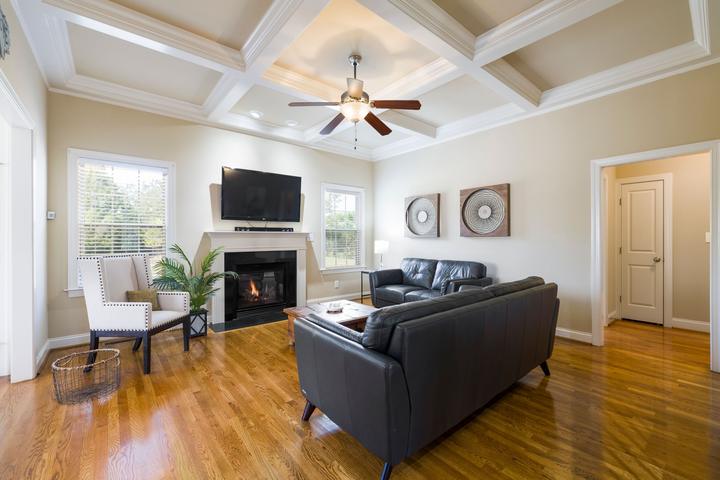
How to Close Up an Unused Chimney
Close the top against water and animals, close the opening below in a way you can undo, and never close a flue that still vents an appliance.
- Licensed & insured
- Owned and run locally
- Family owned and run
- Same-day service available
Get Your Free Inspection
Thank you for the details
We will follow up to agree on an appointment.
Prefer the phone? Call (863) 312-5129
Short version
To close up an unused chimney, stop water and animals at the top with a sloped, screened cap, then close the damper and fireplace opening below in a way that can be removed. Never close a flue that still vents a furnace or water heater. A closed chimney still needs a yearly look.
Jump to
The Work, Explained
First, find out whether anything still uses the flue
Before anything is closed, confirm that nothing vents into the chimney. Gas furnaces and water heaters are sometimes vented through the same masonry chimney as an old fireplace. The U.S. Fire Administration says carbon monoxide poisoning can occur when a fuel-burning appliance is not working or vented properly, and it asks homeowners to keep fireplace and furnace vents clear.
If you are not sure what is connected, have it checked first. Closing the wrong flue is a carbon monoxide risk, not a cosmetic choice.
Close the top first with a cap that sheds water
- Cap hood
- Spark and animal screen
- Flue tile
- Crown
- Drip edge
- Top courses of brick
Rain and animals come in at the top, so that is where the closing starts. The 2023 Florida Building Code, Residential, section R1003.9.1 says masonry chimneys shall have a concrete, metal or stone cap, a drip edge and a caulked bond break around any flue liners, with the cap sloped to shed water. Where a spark arrestor screen is installed, section R1003.9.2 limits its openings to no more than 1/2 inch and no less than 3/8 inch.
The National Park Service recommends adding ventilated chimney caps to unused chimneys that collect rain water. Ventilated matters, because a flue sealed tight at both ends has nowhere for moisture to go. A cap with a screen keeps out nesting animals and leaves the flue able to breathe.
Closing the fireplace opening at the bottom
At the bottom there are two jobs, stopping air from moving through the chimney and stopping people from using it by accident. The damper should be closed, and the building code requires a masonry fireplace damper to be operable from the room. A damper that no longer seals leaves the flue open to the room.
A removable closure, such as a fitted panel or a plug sized to the opening, keeps the choice reversible and lets anyone see inside later. The Chimney Safety Institute of America notes that a tight-sealing top-mounted damper can also reduce airflow coming down the chimney, which helps with odor and drafts.
- Close the damper fully and confirm it holds.
- Fit a removable panel or plug at the opening and label it so nobody lights a fire behind it.
- Move any wood, paper or cleaning products out of the firebox.
- Keep carbon monoxide alarms on every level of the home, as the U.S. Fire Administration advises.
A closed chimney still needs a yearly check
- Chimney cap
- Crown
- Clay flue liner
- Brick stack
- Flashing
- Damper
The National Fire Protection Association standard NFPA 211, as quoted by the Chimney Safety Institute of America, calls for chimneys to be inspected at least once a year for soundness, freedom from deposits and correct clearances, and notes that even an unused chimney can collect nests or deteriorate. Closing it up lowers the risk but does not end the need to look at the crown, flashing and joints.
If the masonry is chipping or the joints are open, repair comes before any coating. The Brick Industry Association says water repellents should be considered only after repairs are complete.
Closing up versus taking the chimney down
Closing up leaves the structure in place and manages what gets in. Taking a chimney down is a different scope. It means opening the roof where the chimney passes through, then rebuilding the framing, roofing and ceilings around the gap. That is the work covered under chimney removal, and it is worth a written estimate when the chimney is leaning, failing or taking up space you want back.
If the chimney is sound and you only want it quiet, closing it up is the smaller and reversible job.
What we do on an unused Lakeland chimney
We check what the flue serves, look at the crown and flashing, and fit a screened cap sized to the flue as part of our chimney cap replacement work. We then close the opening in a way you can undo later. We leave the damper closed and show you where everything sits.
We are a local, family-owned company in Lakeland with an experienced crew, and we are Proudly American. Call (863) 312-5129 for a free inspection and a free written estimate.
Sources
- 2023 Florida Building Code, Residential, Chapter 10, Chimneys and Fireplaces: Sections R1001.7.1, R1003.9, R1003.9.1, R1003.9.2, R1003.10, R1003.10.1, R1003.20 and R1006.1.
- National Park Service Preservation Brief 39, Holding the Line, Controlling Unwanted Moisture in Historic Buildings: Moisture sources in masonry, trapped moisture under waterproof coatings, and ventilated caps on unused chimneys.
- Chimney Safety Institute of America, Homeowner Resources: Annual inspection under NFPA 211, glazed creosote, sweeping thresholds, chemical cleaners, chimney odor and air drawn down a flue.
- U.S. Fire Administration, Carbon Monoxide: Carbon monoxide from fuel-burning appliances that are not vented properly, and keeping vents clear.
- Brick Industry Association Technical Note 46, Maintenance of Brick Masonry: Maintenance of caps and copings, spalling, repointing, brick replacement, vapor-permeable water repellents and estimated times to repair.
Urgent Chimney Concern?
Arrange service after immediate hazards have been addressed.
For fire, suspected gas or a carbon monoxide alarm, leave and call 911 from outside.
What a Visit From Our Lakeland Team Looks Like
-
Family owned and run
Call a family-owned business that explains the job before any work begins.
-
Owned and run locally
Locally owned and operated from our Lakeland office, with work limited to Lakeland, Winter Haven and Auburndale.
-
No hidden fees
The agreed task and price are discussed together. Added work requires another conversation.
-
Workmanship warranty
Repair workmanship is backed by a warranty. Ask what the completed job covers and how to care for it.
Questions Lakeland Homeowners Ask Us
How to close up an unused fireplace?
Close the damper, fit a removable panel or plug in the opening, and cap the chimney top with a sloped, screened cap. Make sure no furnace or water heater vents into the same flue before anything is closed. A removable closure lets you reopen it or inspect it later.
How to block an unused chimney?
Block it at the top with a screened cap that sheds water, and at the bottom with a removable closure. The National Park Service advises ventilated caps on unused chimneys that collect rain, so avoid sealing the flue airtight at both ends. Do not block a flue that still vents a gas appliance.
How to close a chimney damper?
A throat damper closes with the handle, chain or lever on the fireplace, and a top-mounted damper closes with a cable or chain from the firebox. The Chimney Safety Institute of America says to open the damper fully before any fire is lit. A damper that will not close or seal needs repair.
Call a Chimney Company That Stays Local
Calling from Lakeland, Winter Haven or Auburndale? Tell us what the fireplace or chimney is doing, and we will set up a free inspection, quote the job in writing and start only after you say yes.